
Plover Appreciation Day: The Golden Plover
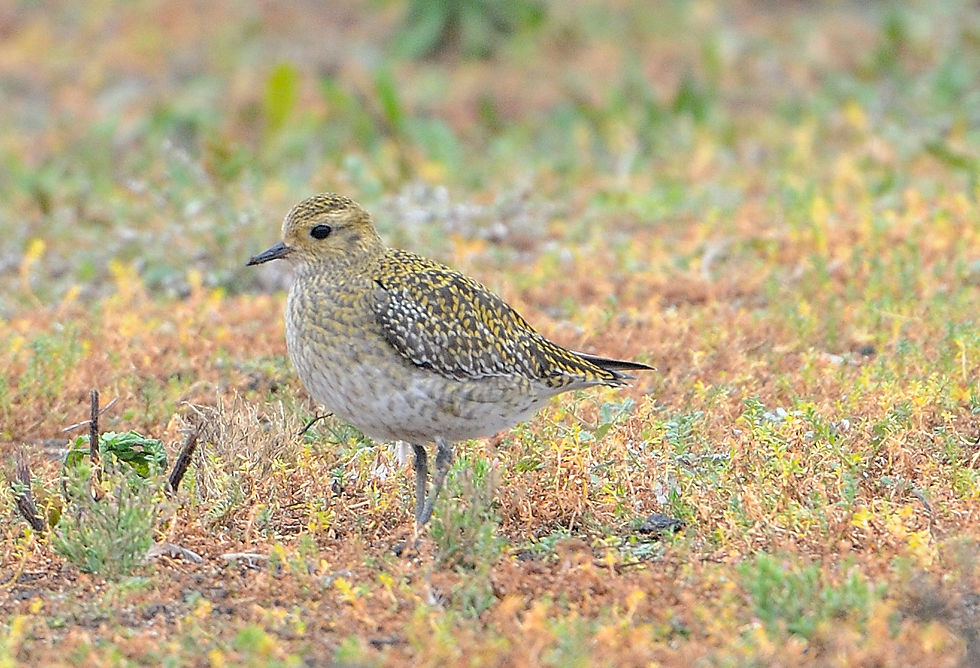
The 16th September is Plover Appreciation Day. To mark this, and the 350th anniversary of the publication of Francis Willughby’s Ornithologia, this post will focus on part of the description of the European Golden Plover in Ornithologia. Willughby’s description of the plumage is now known to be accurate for this species in its winter non-breeding plumage.
Willughby knew this species by the name of the Green Plover or Pluvialis viridis. He also noted that it was known as Pardalis because it was spotted in a way that almost resembled the spots on a Leopard. The modern English name of Golden Plover was officially introduced by Thomas Pennant in 1766. Carl Linnaeus gave it the official binomial name of Charadrius apricarius in 1758. In 1760, Mathurin Jacques Brisson introduced the genus Pluvialis and this gave it its current name of Pluvialis apricaria.

The bird that Willughby examined weighed about 9 ounces (255.1g). In length, from bill to tail, it was 11 inches (27.9cm) and it had a wingspan of 24 inches (60.9cm). Its bill was about an inch in length from tip to gape (2.5cm), straight, black and furrowed around the nostrils. The neck was short; about the same as a Lapwing. Its legs were long and the feet and claws were black. It lacked the back toe, by which feature Willughby noted it was easily distinguished from other birds of its kind. Willughby was correct about this diagnostic feature. True plovers in the genus Pluvialis do completely lack a hind toe, which distinguishes them from lapwings.
The head, neck, shoulders, back and essentially the entire upper side was black covered with yellowish-green spots. Specifically, Willughby described that if one observed each individual feather the observer would discover that the middle part was black and the edges were spotted with a yellowish-green colour. The breast was brownish and also spotted yellowish-green. The belly was white but the feathers on the sides had brown tips and were also crossed with brown lines. The tail was short and comprised of 12 feathers that were the same colour as the back. When the tail feathers were spread, they formed a circular circumference.
In terms of the wing feathers, Willughby noted that the eleventh flight feather in each wing ended in a blunt point but all before it ended in sharp points. All of the flight feathers, except for the five next to the body, were brown. The shafts of the outermost eight or nine primary feathers were half-white. The exterior edge of the primary fifth feather, and those after it, were a little white toward their bottoms. The innermost five feathers next to the body were the same colour as the back. The secondary wing feathers were dusky-brown with white tips. The remainder of the covert feathers on the upper side of the wing were the same colour as the back, whilst on the underside they were the same colour as the belly.
Finally, Willughby commented that its flesh was sweet and tender and was therefore highly esteemed and considered a choice dish not only in England but also abroad.
Further Reading: John Ray, Francis Willughby’s Ornithologia, 1678, p.308. T57.
Author - Debbie Jordan, Middleton Hall Volunteer.


Comments