
The Middleton Accounts of 1526: #26
The next entry in the Middleton household accounts for Sir Henry Willoughby in 1526 was undated. It was described as payment for ale and banners for Cross Week. The amount was 6 pence, which was the equivalent of about £11.03 today.
Cross Week was an alternative name for Rogation Week. Major Rogation always occurred on 25th April but Rogation Week occurred from the Sunday to Wednesday that immediately preceded Ascension Day. Ascension Day occurred 40 days after Easter Sunday, which in 1526 was on 1st April and thus Ascension Day was Thursday 10th May and Rogation Week was the 6th-9th of May.
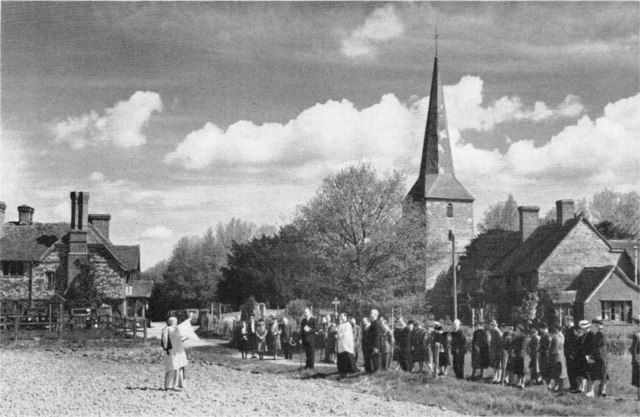
There were a number of key practices observed in pre-Reformation Tudor England during Rogation Week. The main aspect were the processions. The parish priest and churchwardens would lead all the parishioners around various boundaries, including the boundary of the parish and fields. This was a communal way to officially re-affirm the knowledge of the boundaries to everyone, but at the same time it was done in a festive method by them praying, or more specifically asking, for God to protect and bless everything within the boundary and specifically the crops.
One aspect of this passing on of knowledge was what was called the “beating” of the boys. This involved boys from the parish beating key markers around the boundaries with twigs. In some cases, instead of using twigs, the boys themselves were bumped against the markers. The purpose of this was to help the new generation learn and remember specific landmarks that defined boundaries of land ownership.
The procession itself was highly religious. The participants would carry crosses and banners and often chant the Litany of the Saints and sing prayers throughout the procession. Violet clothing was normally worn for both the processions and mass, which signified this as a time of penitence. Furthermore, as they progressed along their procession the priest would normally bless the crops and fields of the parish with holy water with the aim of ensuring a prosperous harvest and fending off natural disasters.
The Monday to Wednesday of Rogation Week were fast days in which everyone was expected to abstain from meat. Middleton accounts show that the Willoughby family in this era, although not necessarily observing the feast days, did definitely observe the fast days. On these days fish, salads, nuts and dairy products were normally consumed. However, after the procession, it was common practice for the community to gather for a special ale. It would include items such as “ganging beer”, which was a mead brewed specifically for the day. In this context, ganging meant going. There are also references to the existence of “rammalation” biscuits, which were made and served at this time. However, the recipe and even the nature of these biscuits are believed to have been lost to history.
Further Reading: W. H. Stevenson, Report on the Manuscripts of Lord Middleton, Historical Manuscripts Commission, 1911. p.379.
Author - Debbie Jordan, Middleton Hall Volunteer.


Comments