
World Bicycle Day: Kathleen de Hamel’s Bicycle Flower Basket
The 3rd June is World Bicycle Day. Middleton Hall has a surprising connection with the history of the bicycle. In 1896, Kathleen de Hamel, who was the eldest daughter of Egbert and Ernestine de Hamel, tenants of Middleton Hall, invented the bicycle flower basket when she was just 13 years old.
As a result of her invention, she was featured in the cycling magazine The Wheelwoman on 19th December 1896. The Wheelwoman was a short-lived magazine that was published in the middle of the cycling boom of the 1890s. Middleton Hall Trust were made aware of this magazine article in the very early days of the Trust and volunteers spent over 30 years searching for a copy of it.
By chance, in October 2023, the Trust was contacted by the National Cycle Museum at Llandrindod Wells. They had received the donation of a number of copies of The Wheelwoman, including the edition that featured Kathleen and they wondered if we were the correct Middleton Hall mentioned in the article. The Museum very kindly copied not only the article but also the specific image of her basket for us. The History Group volunteers of Middleton Hall then decided to make this new acquisition the focus of an exhibition in 2025.
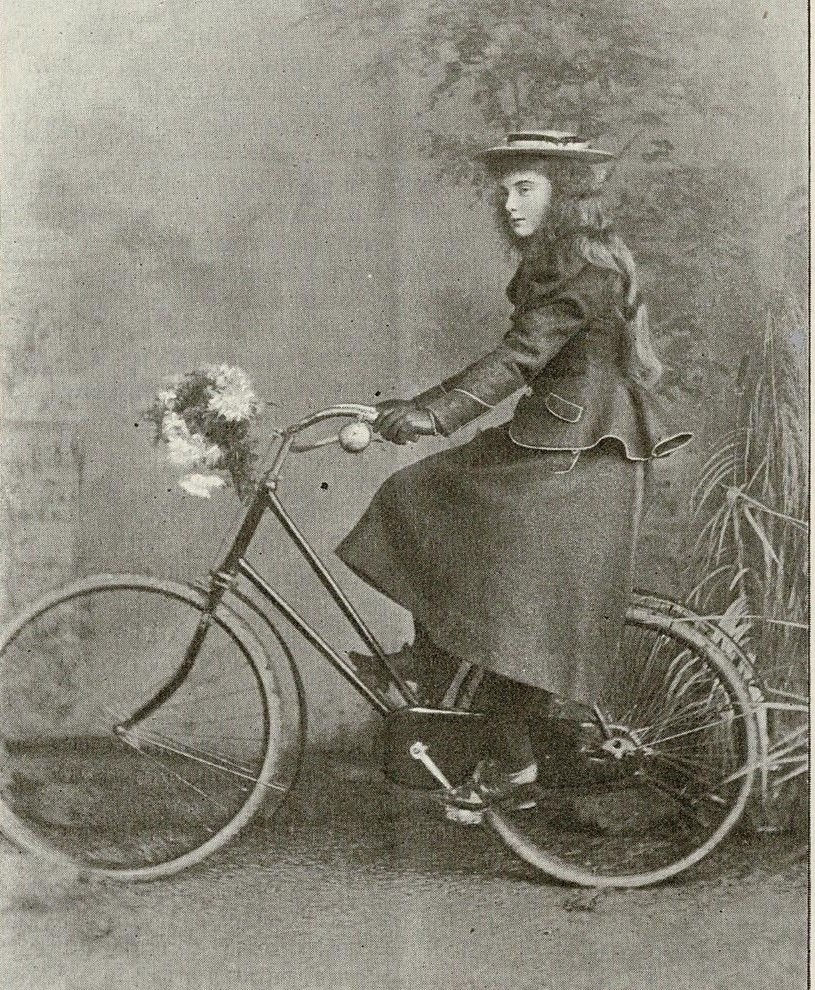
The article described Kathleen as a “charming little wheelwoman.” It explained that Kathleen had invented and designed the basket herself and it was being sold successfully at bazaars to raise money for various charities. Her invention replaced the lamp on the bicycle with a basket specifically designed to hold wildflowers that she had collected when cycling around Middleton.

Baskets were able to be fitted to bicycles after the invention of the safety bicycle in the 1880s. Early bicycle baskets, like the one Kathleen invented, were made of woven wicker. Wicker was a good material because it was lightweight, pliable, durable, widely available and inexpensive.
At the time that Kathleen invented her flower basket, specialised bicycle basket designs had just begun to be invented and patented. These inventions soon led to a significant technological revolution because, as a result, instead of using horses, governments and businesses around the world began to use bicycles with their specialist baskets to make deliveries.
In the magazine article it was also written that Kathleen rode gracefully and evenly and cycled with her father 11 miles and back frequently. It concluded with inspirational words by commenting, “Surely women are coming very much to the fore, when even the rising generation invent such practical and useful things, worthy of universal adoption by wheelwomen.”
Further Reading: "Notable Wheelwomen: Miss Kathleen de Hamel", The Wheelwoman, 19 December 1896, pp.3, 12.
Author - Debbie Jordan, Middleton Hall Volunteer.


Comments