
The Middleton Accounts of 1526: #50
The next entry in the Middleton household accounts for Sir Henry Willoughby in 1526 was described as payment for pears. These were also purchased for the visit to Middleton Hall of Thomas Grey, 2nd Marquess of Dorset. The amount was 20 pence, which was the equivalent of about £36.77 today. This entry was undated but a date of somewhere around the 7th September can be estimated. This is because, due to later Accounts entries, it is believed that the banquet for the Marquess probably took place on the evening of the 8th September and fresh pears would not have been able to be kept more than a couple of days.
Together, the four entries from the Accounts, (#47, #48, #49, #50) along with other knowledge from records about what food produce was generally available at Middleton Hall in Sir Henry’s time, means that it is possible to generate a speculative idea of what might have been served at the banquet for the Marquess.
Tudor banquet courses were very different to the modern sequential concept of starter, main and dessert. The first course in a Tudor banquet was a main event. It was a grand opening statement of the purchasing power of the host, the richness of their Estate and the excellence of their hospitality. There would have been multiple prestigious, meaty, heavy, hot dishes that would have all been placed on the table at the same time. The table would have been packed tightly with the dishes, showing what a wealthy and generous host Sir Henry was.
The centrepiece of the first course would have been the spiced roasted heronsews. Heron was an extremely high-status meat, gracing the tables of only the very highest nobility and royalty. The herons would have been roasted whole, basted with lard to prevent the meat drying out, and a spice rub of possibly ground cloves, mace, cinnamon and black pepper would have been applied. It would have been served with a very intense sauce that looked rich. This might have been something like a golden sauce made from the freshly made verjuice from the Estate’s crab apples, thickened with breadcrumbs and coloured yellow using saffron, which was also grown on the Estate. The presentation of the heron would also have been a show. In its most exquisite presentation, it is known that, before cooking, the heron was not plucked but its skin was carefully peeled off in order to retain the head, neck, wings, tail and feathers in one complete piece. The skin was then salted to preserve it and keep it rigid. After the meat was cooked and slightly cooled, it was then sewn back into the skin. The neck and head were held aloft by internal wires and the wings were fixed spread open on the platter, presenting a stunning visual impact.
Alongside this showpiece, there were probably dishes containing other meats sourced on the Estate. They would most likely have included the high-status meat of venison, which might have been served as a spiced pie because it is known that it was often preserved in this form at Middleton Hall. Beef, mutton and partridge may also have been served. However, all of these would have been elevated to a stunning banquet level by use of spices, colouring and presentation. Bowls of Estate-made mustard would have been served alongside all of the meats.

The second course in a Tudor banquet had a significantly different style. Dishes were smaller and contained more of what were considered delicate foods, such as fish, small birds and vegetables. Estate-produced items for this course may have included bream, capons (chicken) and parsnips. This course aimed to dazzle through artistry and complexity and included intricate pastry-work. There may also have been salads (known as sallets). Middleton records indicate the salads were formed from potherbs, such as watercress, sorrel, borage and sage, with pickled broom buds and then dressed with an acidic liquid such as verjuice. However, for a banquet, the salad would have been elevated with edible flowers such as primroses or violets. It is also known that sausages were made at Middleton Hall. They were seasoned with cloves and mace and balanced with dried currants and these could have been a feature of this course.
However, we can determine that the feature of this course was probably the crayfish. The 12 strikes volume of crayfish purchased means that this banquet was likely to serve a very substantial number of people, probably over 100. The crayfish could have been cooked into a pie or poached. If poached, this would have been done in a highly concentrated aromatic stock that would have been made from water, ale or verjuice and infused with various potherbs and spices such as long pepper, nutmeg and ginger. The live crayfish would then be plunged into the boiling pot. When cooked in this manner the crayfish changed colour from muddy-brown to bright crimson-red. These may then have been displayed as a towering pyramid on the table.
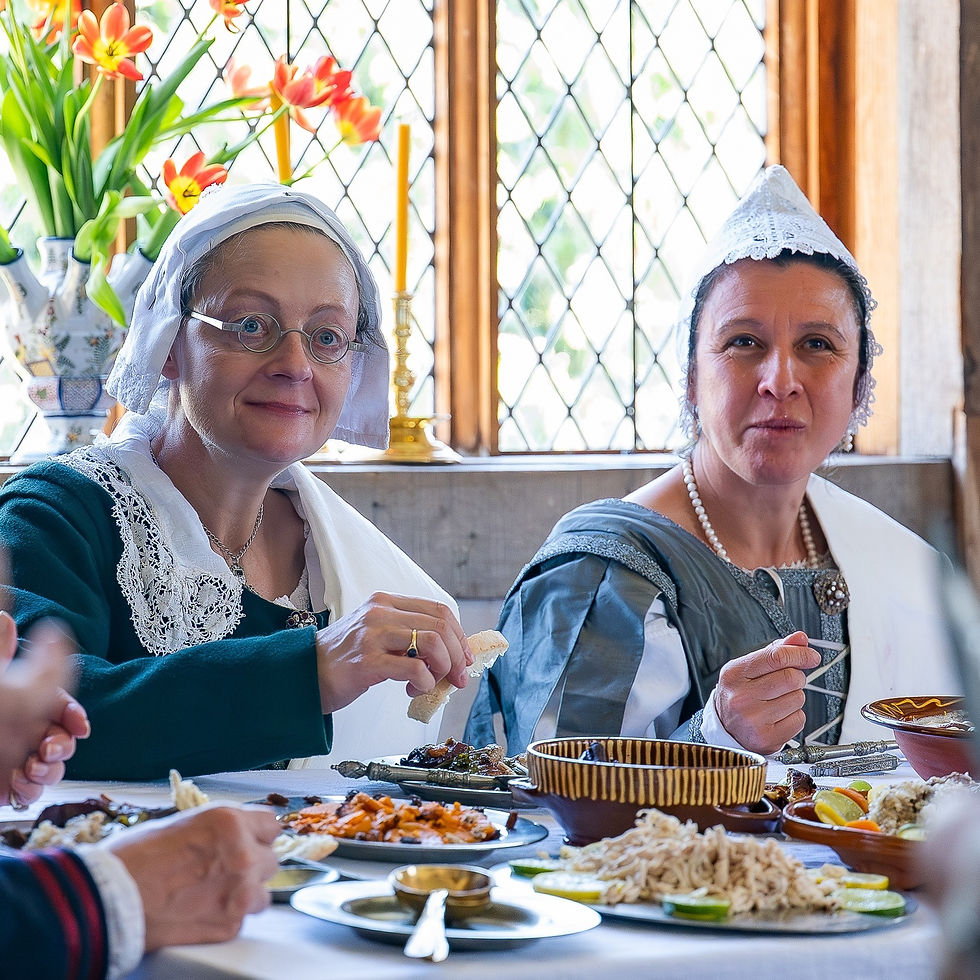
The final part was the sweet banquet, which was also known as “the void”. One of its aims was to ease the digestion after the heavy meal. It would have been strongly focused on the luxury “medicinal” product that was sugar, which would have also displayed Sir Henry’s wealth and the artistry of his household.
Sir Henry had purchased pears and thus it can be assumed that this was his final banquet feature. They are likely to have been poached in a red wine and verjuice broth with sugar that would have been infused with various spices such as cinnamon, ginger and, for something extra, spikenard. The colouring spice sanders could have been added to make the pears turn a bright eye-catching crimson-red. A glaze, likely a fruit conserve made at Middleton Hall, would then have been applied. One conserve known to have been made at the Hall around this time from locally grown produce was Barberry conserve, which would have enhanced the bright red colour even further and added some useful acidity against the sweetness.
However, alongside the pears there would likely have been sugar plate and marchpane (marzipan) sculptures and jellies in both acidic and milk forms that would have been dyed different colours using tournesol. There could have been puddings such as a spiced apple pudding that is known to have been made on the Willoughby estates using fresh apples with sugar, currants, cloves and mace. Cheeses spiced with cloves and mace are known from records to have been made at the Hall for centuries during the Willoughby ownership and these would have been served with wafers in this course. To display his wealth further, there might even have been the addition of a baked rice tart. This is known to have been made at Middleton Hall with distilled rosewater that was also made and distilled at the Hall. The course would have ended with aniseed comfits, which were sugar-coated aniseed seeds, and finally with Hippocras, which was red wine sweetened with sugar and then spiced with cinnamon, ginger and nutmeg.
Further Reading:
W. H. Stevenson, Report on the Manuscripts of Lord Middleton, Historical Manuscripts Commission, 1911. p.384.
Mark Dawson, Plenti and Grase, 2009.
Author - Debbie Jordan, Middleton Hall Volunteer.


Comments